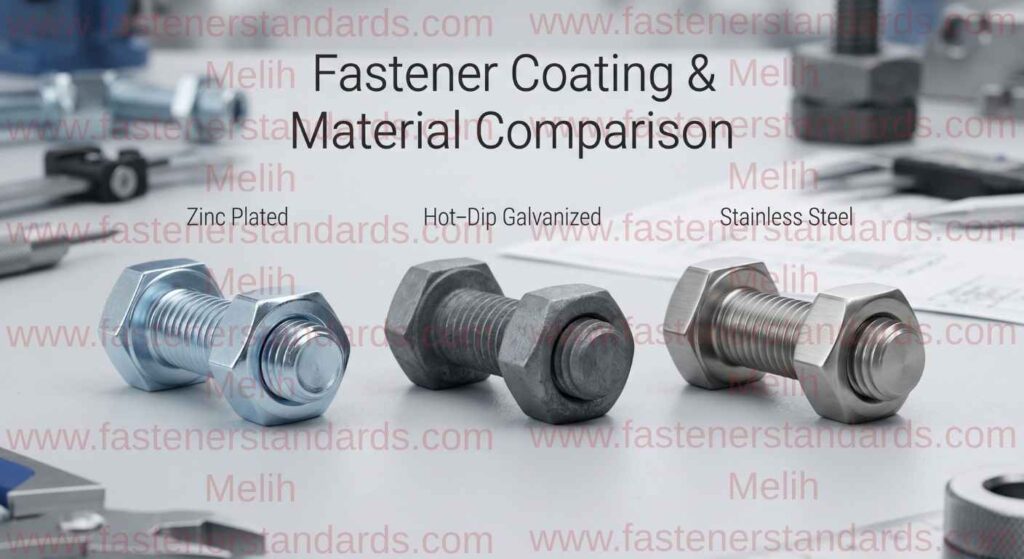
Corrosion is the silent killer of industrial engineering. Every year, billions of dollars are lost globally due to premature structural failures caused by rusted and degraded fasteners. For engineers and procurement professionals, selecting the correct fastener material or coating is not just a technical preference—it is a critical financial decision.
When designing a project, the most common dilemma is choosing between Zinc Plated, Hot-Dip Galvanized (HDG), and Stainless Steel fasteners. Using the wrong type can lead to catastrophic failures, while over-specifying can unnecessarily inflate project budgets.
In this comprehensive guide, we will analyze these three critical options to help you make the best engineering and purchasing decisions.
1. Zinc Plated Fasteners (Electro-Galvanized)
Zinc plating is a process where a thin layer of zinc is applied to a carbon steel fastener using an electrical current. It is one of the most common and economical fastener finishes available on the market.
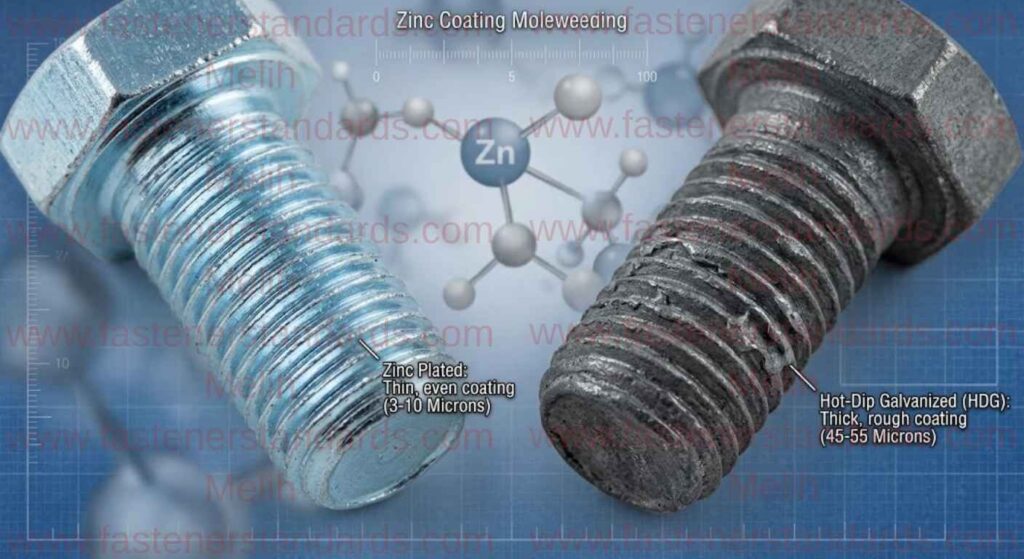
The primary advantage of zinc plating is its cost-effectiveness. It provides a clean, smooth, and shiny finish, making it aesthetically pleasing for visible assemblies. However, the protective zinc layer is extremely thin (typically 3 to 10 microns).
- Best For: Indoor applications, dry environments, electronics, and light machinery.
- Pros: Highly affordable, excellent dimensional tolerance, visually appealing.
- Cons: Very low corrosion resistance. It will rust quickly if exposed to weather, moisture, or harsh chemicals.
2. Hot-Dip Galvanized (HDG) Fasteners
Hot-Dip Galvanizing involves dipping the carbon steel fastener into a vat of molten zinc. This creates a thick, robust, and tightly bonded alloy coating that provides exceptional barrier protection.
HDG fasteners are the backbone of outdoor construction. The coating is significantly thicker than standard zinc plating (usually around 45 to 55 microns), offering a sacrificial layer that protects the core steel even if the surface is scratched.
- Best For: Outdoor construction, structural steel framing, bridges, and treated lumber.
- Pros: Excellent long-term corrosion resistance in outdoor environments, highly durable, lower cost than stainless steel.
- Cons: The thick coating can alter thread dimensions. Standard nuts will not fit HDG bolts; they require specifically tapped “oversized” HDG nuts. The finish is dull and rough.
3. Stainless Steel Fasteners (A2 and A4 Grades)
Unlike zinc plated or HDG fasteners, stainless steel is not a coating; it is a solid, corrosion-resistant material. The protection comes from chromium within the steel, which forms an invisible, self-healing oxide layer when exposed to oxygen.
The two most common fastener grades are A2 (304) and A4 (316). While A2 is great for general outdoor use, A4 contains molybdenum, making it highly resistant to chlorides and industrial chemicals.
- Best For: Marine environments, chemical processing plants, food and beverage industries, and highly corrosive atmospheres.
- Pros: Ultimate corrosion resistance, no coating to scratch off, highly aesthetic, non-magnetic (mostly).
- Cons: Highest initial procurement cost. Also, standard stainless steel (Property Class 70 or 80) generally has lower tensile strength compared to high-strength carbon steel bolts (like Class 10.9 or 12.9).
Comparative Analysis: Cost vs. Performance
To simplify your procurement process, here is a direct comparison of the three options:
| Feature | Zinc Plated (Clear/Blue) | Hot-Dip Galvanized (HDG) | Stainless Steel (A2/A4) |
| Corrosion Resistance | Low | High | Ultimate |
| Relative Cost | $ (Lowest) | $$(Moderate) | $$$ (Highest) |
| Primary Environment | Indoor / Dry | Outdoor / Industrial | Marine / Chemical / Food |
| Coating Thickness | 3 – 10 Microns | 45 – 55 Microns | N/A (Solid Material) |
| Expected Lifespan (Outdoor) | < 1 Year (Will rust) | 20 – 50+ Years | 50+ Years |
Engineering Conclusion & Procurement Advice
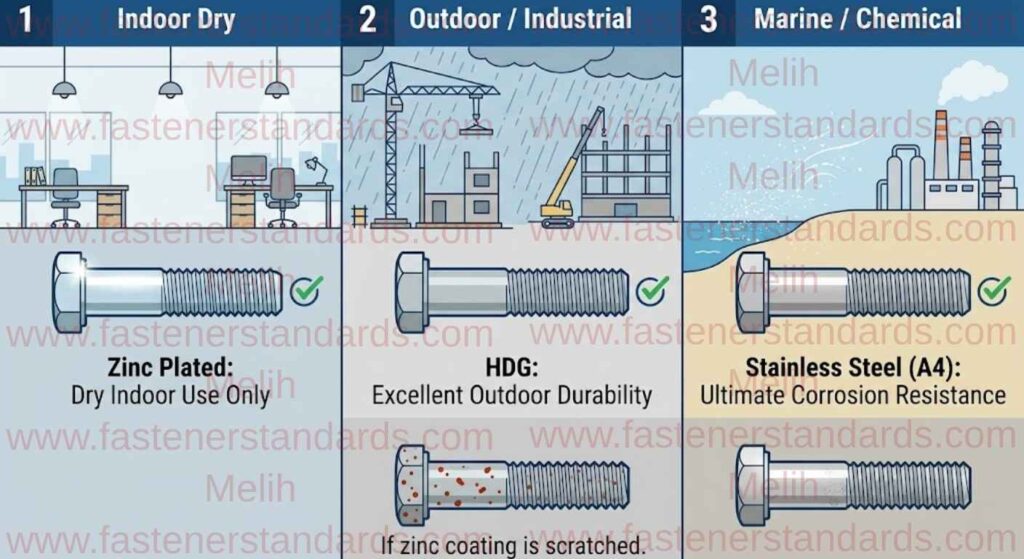
The golden rule of fastener selection is matching the material to the environment.
If your project is entirely indoors and protected from moisture, Zinc Plated fasteners are the most logical and budget-friendly choice. For heavy-duty outdoor structural projects where longevity is required but budgets are tight, Hot-Dip Galvanized is the industry standard. Finally, if failure is not an option and the environment includes salt water, chemicals, or strict hygiene requirements, investing in A4 Stainless Steel will save money in long-term maintenance.
By standardizing your purchasing guidelines based on these properties, you can ensure safety, extend the lifespan of your assemblies, and optimize your project costs.