In the industrial world, a fastener is much more than a piece of threaded metal. It is a critical component engineered to withstand specific stresses, temperatures, and environmental pressures. For engineers and procurement professionals, understanding fastener material standards is the difference between a project’s long-term success and a catastrophic mechanical failure.
This article explores the technical hierarchy of fastener materials, focusing on why certain “numbers” on a bolt head dictate the safety of an entire assembly.
Decoding the Metric Property Class System
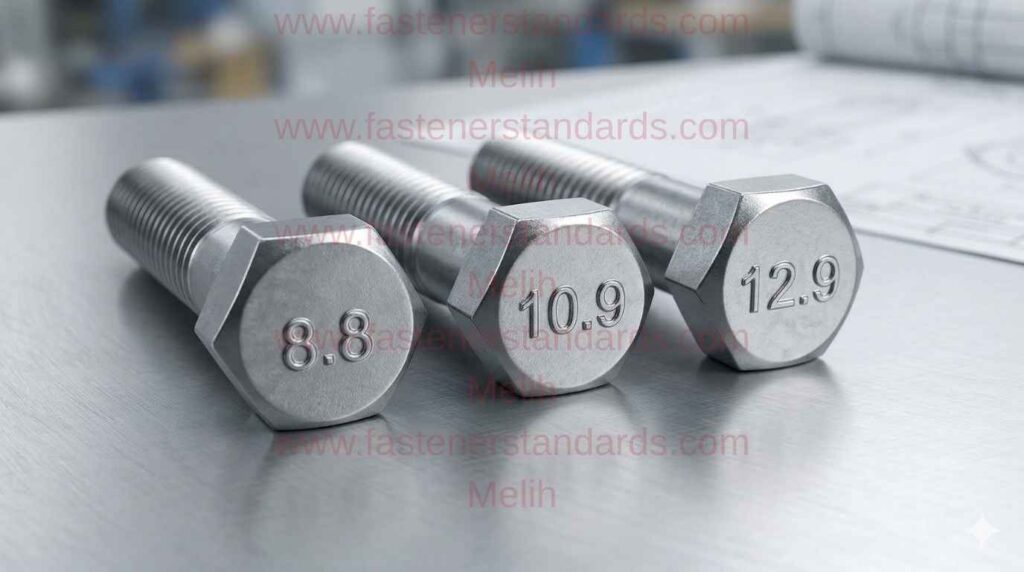
Unlike imperial measurements, the metric system for fastener strength is remarkably logical. When you examine a bolt head and see embossed numbers like 8.8, 10.9, or 12.9, you are looking at a standardized shorthand for the material’s mechanical limits.
The Physics of the Numbers
To ensure your project meets global safety compliance, you must understand what these digits represent:
- Tensile Strength (The First Number): Multiplying this number by 100 gives you the nominal tensile strength in Megapascals ($MPa$). It tells you the maximum stress the material can handle before breaking.
- Yield Ratio (The Second Number): This decimal represents the point at which the bolt will permanently deform. An ‘.8’ means the bolt will begin to stretch permanently at 80% of its ultimate breaking strength.
Comparing High-Tensile Steel Grades
Grade 8.8: The Versatile Workhorse
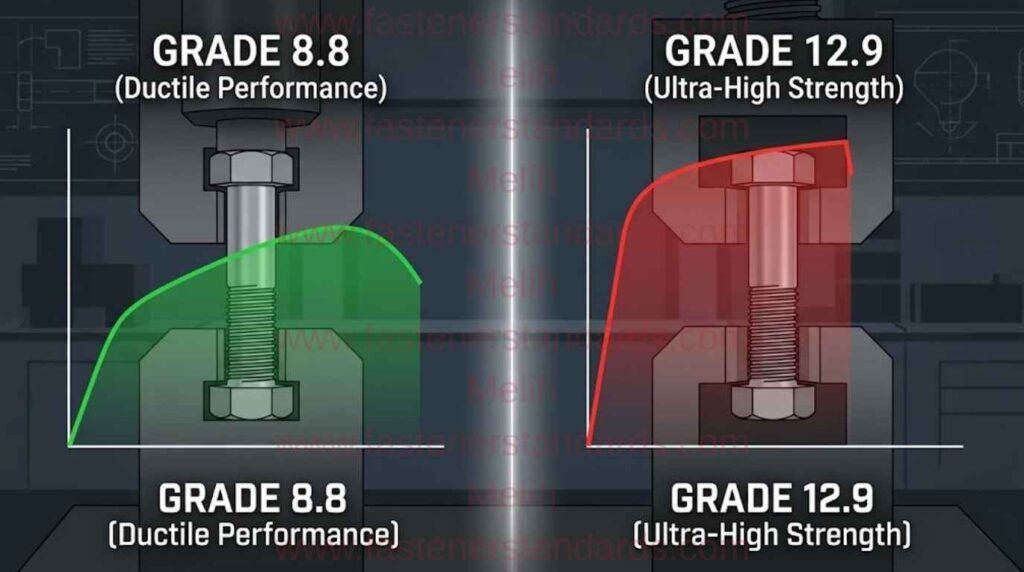
Known as “medium carbon steel,” Grade 8.8 is the industry standard for structural steelwork. It strikes an ideal balance between ductility (the ability to deform without snapping) and strength.
- Best For: Automotive frames, construction scaffolding, and machinery mounting.
Grade 10.9: Engineering Precision
This grade requires alloy steel and specialized heat treatment (quenching and tempering). Grade 10.9 bolts are utilized when high clamping forces are necessary but space for larger fasteners is limited.
- Best For: Heavy-duty engine components, suspension systems, and planetary gearboxes.
Grade 12.9: The Peak of Carbon Steel
This is the highest strength class for industrial fasteners. While extremely strong, Grade 12.9 bolts are less ductile and more sensitive to environmental factors like hydrogen embrittlement.
- Best For: High-pressure hydraulic systems and heavy mining equipment.
Corrosion Resistance: Beyond Carbon Steel
In many environments, strength is secondary to survival. This is where Stainless Steel Standards come into play:
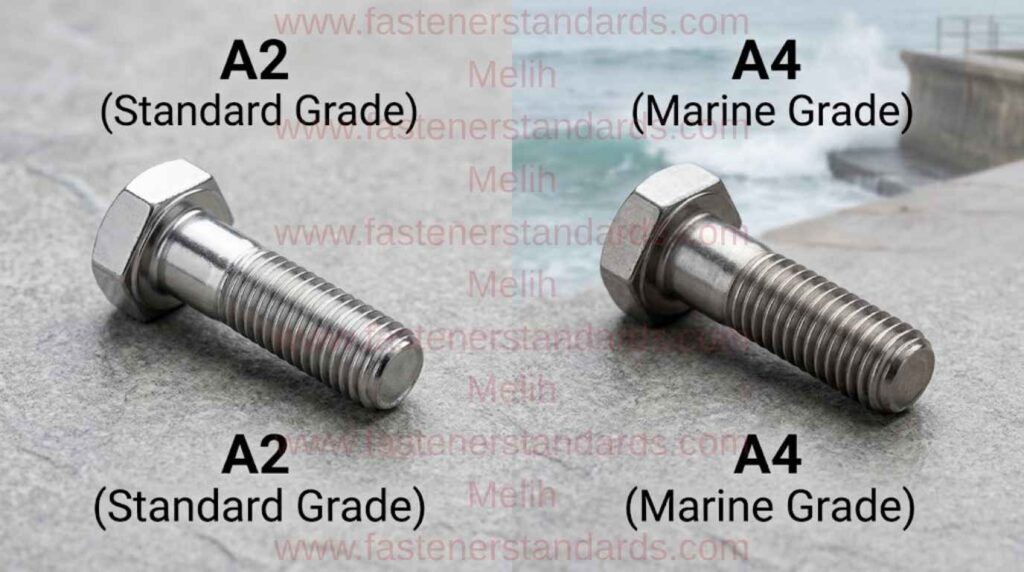
- A2 (Standard Grade): Excellent for general outdoor exposure where moisture is present but salt is not.
- A4 (Marine Grade): Enhanced with Molybdenum, this grade is essential for chemical processing plants and coastal environments where chloride corrosion is a constant threat.
Conclusion: Why Verification Matters
Selecting a fastener material based solely on price is a dangerous strategy. For AdSense-compliant technical sites and professional engineering blogs, providing accurate, vetted data on material property classes is essential. Always ensure your suppliers provide Material Test Reports (MTRs) to verify that the “8.8” on the bolt head truly matches the chemistry of the steel inside.